
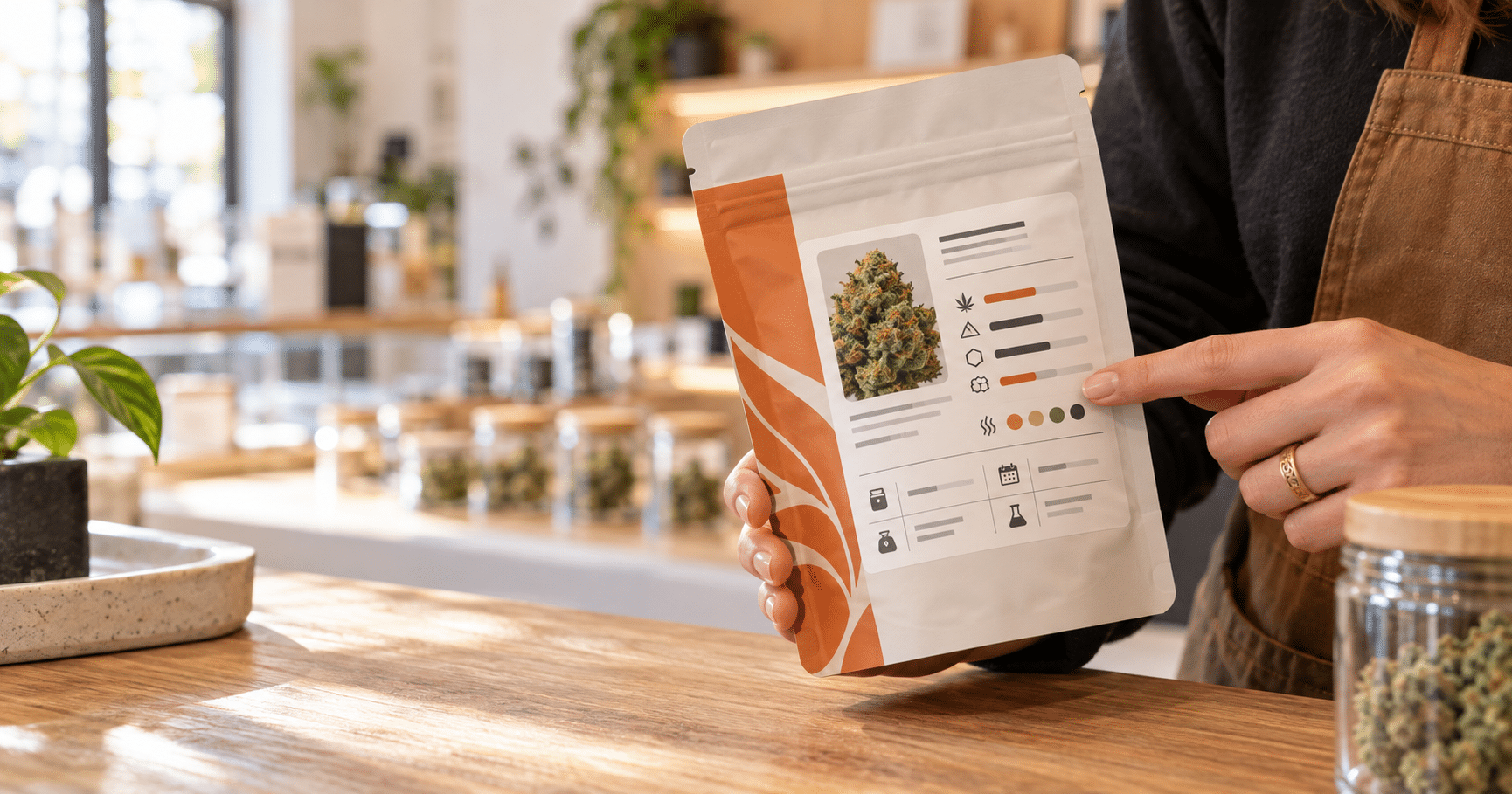
This Massachusetts cannabis label guide explains how to compare THC, THCA, TAC, terpenes, serving sizes, testing information and product dates. Reading the complete label helps shoppers understand what is inside flower, edibles, concentrates and vapes instead of choosing a product based on one potency number alone.
A cannabis label can look like it was designed by a chemist, a lawyer and someone committed to tiny type. Once you know where to look, it becomes a useful comparison tool.
This Massachusetts cannabis label guide explains how to read flower, edible, concentrate and vape packaging so you can compare products with greater confidence.
Massachusetts Cannabis Label Guide: What Information Appears on the Label?
A Massachusetts cannabis label tells you who produced the product, what it contains, its potency, how much is in the package, when it was packaged or tested, and which safety warnings apply. The exact information varies by product type.
Flower labels include details such as the strain or product name, net weight, cannabinoid profile, batch number, package date and testing information. Edibles, vapes, concentrates, tinctures and topicals may also list serving sizes, ingredients, allergens and additives.
Current Massachusetts adult-use cannabis regulations explain the labeling requirements for flower, edibles, concentrates, tinctures and topicals.
Use this Massachusetts cannabis label guide checklist to find the most useful information first:
Use this quick checklist:
- Check the product type. Flower, edibles, vapes and concentrates show potency differently.
- Find the THC amount. For edibles, check the THC in one serving and the entire package.
- Look beyond THC. Review the other cannabinoids and terpene information when available.
- Check the dates. Look for the harvest, testing, packaging or use-by dates.
- Read the ingredients. Check for allergens and other added ingredients.
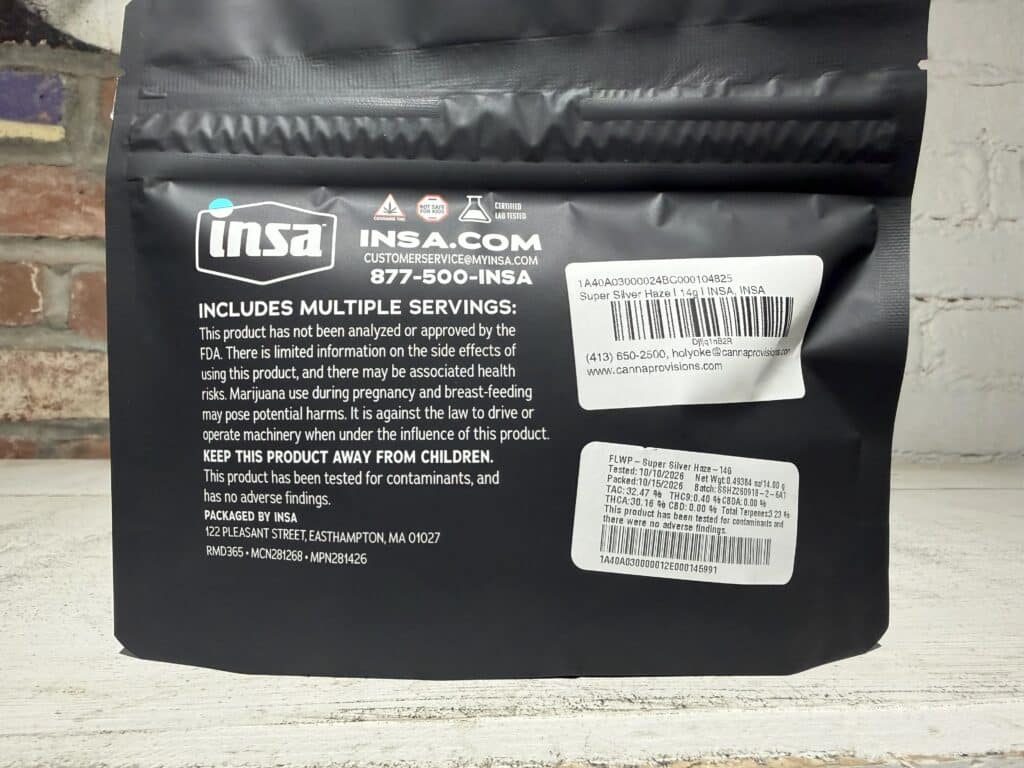
How do you read the cannabinoid profile?
The cannabinoid profile shows the amounts of THC, CBD and other cannabinoids measured in a product. Flower, vapes and concentrates usually display cannabinoids as percentages, while edibles commonly list active cannabinoids in milligrams per serving and per package.
Cannabinoids you may see include:
- THC: The primary cannabinoid associated with intoxicating effects.
- THCA: The form found naturally in raw flower that converts into THC when heated.
- CBD: A non-intoxicating cannabinoid that may appear in THC products or products formulated with a more balanced cannabinoid ratio.
- CBG: A minor cannabinoid found in smaller amounts in some cannabis products.
- CBN: A minor cannabinoid sometimes included in products designed for nighttime use, although the label cannot predict how it will affect you.
- CBC: Another non-intoxicating minor cannabinoid that may appear in the complete profile.
Start by identifying the cannabinoids with the largest amounts, then consider how they relate to the product type. For flower, total THC is generally the most useful potency estimate. For edibles, focus on the active THC and other cannabinoids in one serving—not only the amount in the entire package.
A longer cannabinoid list does not automatically mean a product is better. Use the profile to compare products, understand cannabinoid ratios and keep track of what you prefer.
Current Massachusetts adult-use cannabis regulations explain the labeling requirements for flower, edibles, concentrates, tinctures and topicals.
What is the difference between THC, THCA and total THC?
One of the most useful parts of this Massachusetts cannabis label guide is understanding the difference between THC, THCA and total THC.
THC is the active cannabinoid associated with cannabis’s intoxicating effects. THCA is the form found naturally in raw flower and becomes THC when heated. Total THC estimates the product’s potential THC after heating, making it the most useful potency number when comparing flower.
In simple terms:
-
-
- Delta-9 THC: The THC that is already active.
- THCA: The non-intoxicating form that converts into THC when flower is smoked, vaped or otherwise heated.
- Total THC: An estimate of the combined THC available after heating.
-
Massachusetts testing laboratories calculate total THC using this formula: Total THC = delta-9 THC + (THCA × 0.877)
The 0.877 accounts for the weight lost when THCA converts into THC.
For consumers comparing flower, total THC is generally more useful than the delta-9 THC or THCA number alone. However, it measures potency—not overall quality or how the product will feel. Freshness, aroma, terpene profile, cultivation and personal tolerance also matter.
What does TAC mean on a cannabis label?
TAC usually means Total Active Cannabinoids or Total Cannabinoid Content. It summarizes multiple cannabinoids detected in a product, potentially including THC, CBD, CBG and others. TAC is not the same as THC, and shoppers should use the itemized cannabinoid profile to understand what contributes to the total.
TAC can exceed total THC because it may include other cannabinoids. Presentation can vary, so treat TAC as a summary rather than a complete description of quality or expected experience.
The Massachusetts Cannabis Control Commission provides additional guidance on cannabinoid reporting, including how laboratories calculate and report total THC.
How do you read a cannabis terpene profile?
A terpene profile shows the aromatic compounds that contribute to a product’s scent and flavor. Terpenes are generally listed as percentages, with the highest percentages representing the product’s dominant terpenes. Instead of looking for one “best” terpene, use the complete profile to compare products with aromas and flavors you have previously enjoyed.
Common terpenes include:
-
-
- Myrcene: Often associated with earthy, herbal or musky aromas.
- Limonene: Commonly produces bright citrus aromas.
- Caryophyllene: Often described as peppery, spicy or woody.
- Pinene: Associated with pine, herbs and fresh forest-like aromas.
- Linalool: Commonly described as floral or lavender-like.
-
You may also see a total terpene percentage, which combines the measured terpenes in the product. A larger total can suggest a more pronounced aromatic profile, but it does not automatically mean the product is fresher, higher quality or a better fit for you.
When comparing flower, look at the two or three terpenes with the highest percentages. These dominant terpenes provide a more useful picture of the product’s expected aroma and flavor than the total terpene percentage alone. Terpenes may also contribute to the overall experience, but they cannot reliably predict exactly how a product will make an individual feel.
Not every flower label includes a detailed terpene panel. If terpene information is unavailable on the package, you can ask whether a certificate of analysis or additional batch information is available.
For vapes, Massachusetts labels must identify certain additives and state whether the terpenes are exclusively cannabis-derived or come from other sources. This information can help you understand how the vape’s flavor was created and compare products made with cannabis-derived terpenes, botanical terpenes or other permitted ingredients.
How do you read an edible label?
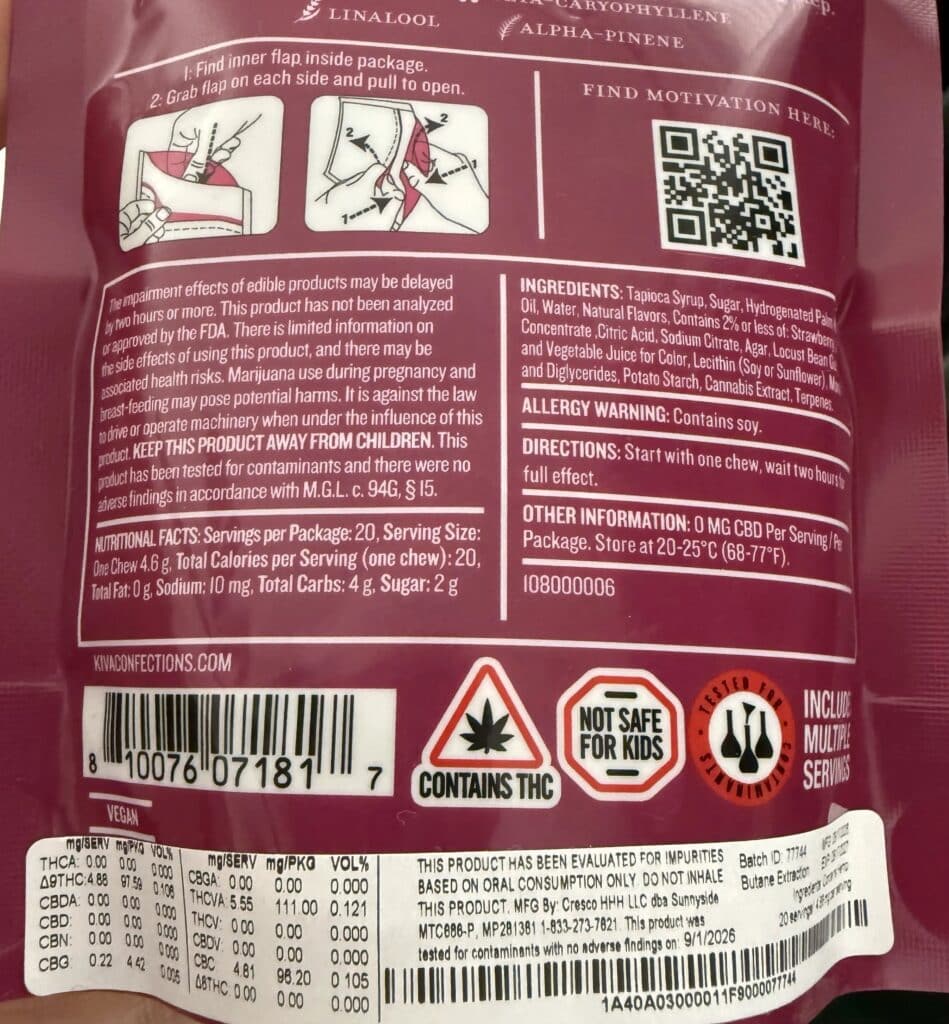
Read an edible label twice: first for active THC in one serving, then for active THC in the entire package. Also check the serving count, piece size, ingredients, allergens, directions, production date and use-by date. Never assume that one package, one piece and one serving mean the same thing.
Under rules effective September 11, 2026, an adult-use edible may contain no more than 5.5 milligrams of active THC per serving and 20 servings or 110 milligrams per package, including permitted variance. Labels must identify the serving size and serving count.
Edible effects may be delayed by two hours or more. Our staff recommends starting low and waiting before taking more.
How do you check a cannabis label for allergens?
Check the complete ingredient list and look for a separate allergen warning before using an edible or other manufactured cannabis product. Common allergens may include milk, eggs, peanuts, tree nuts, wheat, soy, fish, shellfish and sesame.
Massachusetts labels must include a warning when nuts or other known allergens are present in edibles, concentrates, extracts, tinctures and topicals.
If you have a food allergy:
- Read the ingredient list and allergen warning every time you purchase a product.
- Do not assume that two flavors from the same brand contain the same ingredients.
- Check the label for statements about shared equipment or manufacturing facilities.
- Ask for more product information if the package does not address a specific allergen.
- Contact the manufacturer before use if you have a severe allergy or concerns about cross-contact.
Recipes and manufacturing processes can change, so check the package you are purchasing even if you have used that product before.
What do the testing date, package date and harvest date mean?
Dates are another important part of the Massachusetts cannabis label guide because they provide context about when a product was harvested, tested, packaged or produced.
The testing date shows when a sample was analyzed, the package date shows when the product entered its retail package, and the harvest date identifies when flower was cut. These dates are not interchangeable, and depending on the product and packaging process, you may see some rather than all of them.
-
-
- Harvest date: Most directly relevant to flower age when it appears.
- Testing date: Connects the product to required laboratory analysis.
- Package date: Shows when the product was placed into its sale package.
- Creation or production date: Common on edibles and manufactured products.
- Use-by or expiration date: Helps assess the manufacturer’s recommended product window.
-
A newer package date does not necessarily mean a newer harvest. For flower, consider all available dates and storage conditions together.
Are cannabis products tested in Massachusetts?
Yes. Adult-use cannabis sold through licensed Massachusetts retailers must be tested by a licensed independent testing laboratory. Required analysis includes the cannabinoid profile and specified contaminants; ready-to-sell vaporizer products also receive additional screening for heavy metals and vitamin E acetate.
Required contaminant testing includes mold, mildew, heavy metals, plant growth regulators and pesticides. Labels carry a testing date and a statement or seal addressing the results.
Results can vary between batches. In August 2026, the Massachusetts Cannabis Control Commission reported that most audited flower samples fell within its accepted range, while 13 of 63 required follow-up. Compare the package in front of you rather than relying on a percentage from an older batch of the same strain.
What should you ask a budtender about a cannabis label?
Ask a budtender which number represents total THC, what contributes to TAC, whether terpene data is available, how many servings are in the package, what the relevant dates mean and how the batch compares with products you have previously enjoyed.
Bring preferences, not just a target percentage. Mention whether you care most about aroma, flavor, product format, serving control, freshness or value.
Frequently Asked Questions
What is the most important number on a cannabis label?
There is no single most important number for every shopper. For flower, start with total THC and the full cannabinoid profile; for edibles, prioritize active THC per serving and per package. Then compare the relevant dates, ingredients, testing information and terpene data when available.
Is TAC the same as THC?
No. THC refers to a specific cannabinoid, while TAC generally summarizes multiple cannabinoids measured in the product. Because TAC presentation can vary, read the itemized cannabinoid profile instead of assuming the entire TAC percentage represents THC.
Does higher THC mean better cannabis?
No. Higher THC means greater measured potency, not automatically better quality or a better personal experience. Freshness, aroma, cultivation, cannabinoid balance, terpene content, product format and individual tolerance can all influence which product is the better fit.
How many milligrams are in one Massachusetts edible serving?
Under Massachusetts adult-use regulations effective September 11, 2026, an edible may contain no more than 5.5 milligrams of active THC per serving, including the permitted testing variance. Check the specific label because products may contain less than that maximum.
Do Massachusetts cannabis labels show terpenes?
Some do, but a detailed flower terpene panel is not guaranteed on every label. Current vaporizer labeling rules require disclosure of specific additives and whether the terpenes are exclusively cannabis-derived or derived from sources other than cannabis.
What should I do if I do not understand a cannabis label?
Ask a budtender to walk through the exact package with you. Bring up your preferred format, experience level, flavor preferences and serving needs. A budtender can explain the displayed information without treating one potency number as the whole story.
Use This Massachusetts Cannabis Label Guide at Canna Provisions
Reading the label before you buy makes it easier to compare batches, understand serving sizes and remember what worked for you. Browse current menus through the Canna Provisions app, then bring your questions to our budtenders in Lee, Holyoke or Pittsfield.
Massachusetts adults 21 and older should also review the state’s current cannabis purchase limits before shopping.
Visit Canna Provisions: Lee, MA | Holyoke, MA | Pittsfield, MA
Please consume responsibly. Cannabis products are for adults 21 and older. This product may cause impairment and may be habit forming. Keep out of the reach of children. Cannabis is not a substitute for medical treatment – consult a healthcare professional for medical advice.
Related Reading
Canna Provisions © 2026
Site by CannaPlanners